
In rural Kwale County, Kenya, access to healthcare has long been a challenge due to the region’s rugged terrain and limited transportation options. The area’s vast distances, unpaved roads, and a lack of affordable public transport make it difficult for healthcare workers and patients to reach clinics and essential services. As a result, many communities, especially those in remote areas, face significant barriers to receiving timely and adequate healthcare.
In this region of Kenya, Community Health Promoters (CHPs) are essential to the health system, visiting households to offer maternal care, child immunizations, and other vital preventive, promotive, curative, and palliative health services. They are the link between the community and the formal health system. Yet, many CHPs face an almost impossible task: traveling vast distances on foot to reach households spread out over remote areas. For some, this meant covering only one or two households daily, leaving many families underserved.
Recognizing the critical gap in healthcare access, World Bicycle Relief and Amref Health Africa in Kenya came together with a shared mission: to empower these frontline health workers with the tools they need to reach their communities more effectively. At the heart of this mission lies the simple yet transformative solution—bicycles. By providing CHPs with reliable transportation, this partnership aims to bridge the “last mile” in healthcare, ensuring that no household is too far away to receive essential care.
World Bicycle Relief’s vision is rooted in the belief that mobility is a key driver of progress and health. Maureen Kolenyo, Regional Director of World Bicycle Relief East Africa, emphasized this point at the project’s launch in Kwale County.
“Our aim is to help the county deliver community services better through the Power of Bicycles,” she said. By giving CHPs the ability to travel faster and farther, World Bicycle Relief and Amref are not only improving healthcare access but also reinforcing the importance of mobility in the fight against health inequity.
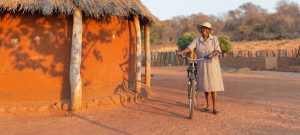
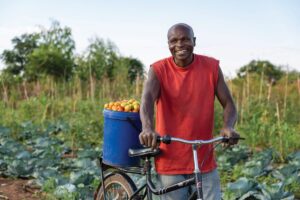
In March and April 2024, the partnership delivered 100 Buffalo Bicycles to CHPs across three of Kwale’s sub-counties. These bicycles empower these workers to visit more households, reach patients in critical need, and provide health education in remote communities. The bicycles serve as a lifeline, enabling CHPs to overcome the vast distances that previously limited their ability to deliver timely care.
For Amref, this partnership aligns seamlessly with their new Primary Health Care (PHC) strategy, which emphasizes community-led health and people-centered health systems while prioritizing the care of women and children.
“This project supports counties and communities in improving lives, especially through closer monitoring of pregnant women and young people,” said Aloise Gikunda, representing Amref at the launch. By ensuring CHPs have the mobility they need, Amref and World Bicycle Relief are providing a sustainable solution to address some of Kenya’s most pressing health challenges.
The results speak for themselves. Over a three-month period, CHPs with bicycles reached an average of 92% of their targeted households—almost double the 50% reported by CHPs without bicycles during the same time frame as monitored through the electronic community health information system (eCHIS). This increase in mobility has allowed healthcare workers to provide more comprehensive care to a larger portion of the population. Additionally, 95% of CHPs reported that having access to a bicycle has enabled them to also increase the number of referrals made, particularly for antenatal care and other critical services.
One of the CHPs directly impacted by this partnership is Athuman, who, for 15 years, walked up to 7 kilometers each day and served only a fraction of his community due to the long distances involved.
“In the past, I could only visit one or two households per day, which was far below my target,” he said. But since receiving his Buffalo Bicycle, Athuman’s ability to reach families has transformed. Now, he can visit up to 12 households a day, providing more comprehensive care, tracking pregnancies, and offering timely referrals for antenatal care.
Athuman’s story is just one of many highlighting the importance of last-mile mobility in rural healthcare. CHPs across Kwale County can now travel farther, reach more households, and deliver life-saving care to more people. This increased mobility has not only improved the frequency of household visits but has also had a direct impact on health outcomes.
In Chilumani, a village that once recorded zero facility deliveries of new babies, four successful deliveries have already been made this year, thanks to closer monitoring and referrals made possible by the bicycles.
Buffalo Bicycles have also made a significant difference in maternal and child health. In remote Maasai communities in Nyango, where pastoral and nomadic lifestyles complicate health service delivery, the number of facility deliveries of babies has surpassed targets due to the increased mobility of CHPs. Women in these communities now receive more timely antenatal care, improving their chances of safe delivery and healthier outcomes for their newborns.
For World Bicycle Relief and Amref, the success of this partnership goes beyond the immediate impact on healthcare delivery. It speaks to the broader mission shared by both organizations—to empower communities with the tools and resources needed to thrive.“We are incredibly proud of this partnership,” said World Bicycle Relief’s Kolenyo. “It demonstrates the power of collaboration with the government and key health actors and the incredible impact that bicycles can have in rural healthcare systems. By providing CHPs with bicycles, we are ensuring that even the most remote communities are not left behind in receiving the healthcare they deserve.”
Looking ahead, the vision is to scale this program even further. Hon. Sylvia Chidodo, County Secretary for Kwale, expressed her gratitude and hope for the future. “Health is on our agenda, and we appreciate the support for bicycles to improve access to health. In collaboration with partners from Amref and World Bicycle Relief, we will seek to have all 1,670 CHPs provided with bicycles through leveraging county and national government funding.”
Together, World Bicycle Relief and Amref are proving that when healthcare workers are empowered with the right tools, they can transform lives. By focusing on last-mile mobility, this partnership is creating a future where healthcare is accessible to all, no matter how far they are from the nearest clinic. And in Kwale County, that future is already looking bright.