For students in rural Zimbabwe, the journey to education is fraught with challenges. Long distances to reach school, inadequate infrastructure, human-wildlife conflict, and socio-economic barriers make it difficult for many to access the education they deserve. These barriers disproportionately affect girls, making their path to learning even more treacherous.
In response, World Bicycle Relief (WBR) and the NoBarriers Education Foundation have forged a powerful partnership aimed at removing these obstacles and creating opportunities for the most vulnerable students. With a shared vision, both organizations are focused on transforming educational outcomes by improving school attendance, punctuality, retention, transition, and academic performance for students in rural communities.
No Barriers Education Foundation, an Australian non-profit organization, is dedicated to supporting Zimbabwean children and youth in their pursuit of education. Through initiatives such as school meals, menstrual and sexual health support, school fee subsidies, and bicycles, NoBarriers helps ensure that children stay in school and thrive in a supportive learning environment.
By partnering with World Bicycle Relief, NoBarriers seeks to tackle one of the most significant hurdles students face: the physical distance between home and school. The partnership provides a lifeline in regions like Muzarabani, where some students travel over 15 kilometers each way. For many, especially girls, the journey to school becomes unbearable, particularly during the rainy season.
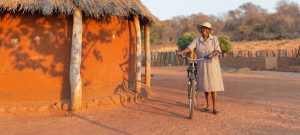
Over the past three years, the partnership has provided 263 Buffalo Bicycles to students living more than 6 kilometers from their schools. Designed specifically to endure the rugged terrain of Southern Africa, Buffalo Bicycles are built with high-quality parts to ensure durability and comfort.
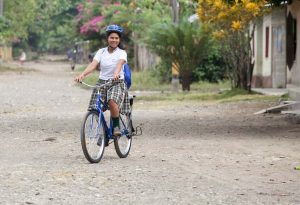
The impact of these bicycles on students’ lives is profound. Shorter commutes mean more time and energy for studies and extracurricular activities. Absenteeism drops, and students can attend school consistently, regardless of bad weather or physical exhaustion. Girls, in particular, report feeling safer on their journeys, with the added benefit of having time to help with household chores and complete their homework.
World Bicycle Relief’s research shows that students who receive Buffalo Bicycles gain a sense of control over their lives and a greater belief in their potential to succeed. The long-term effects are clear: improved educational outcomes, higher rates of school completion, and a greater likelihood of pursuing further education, breaking the cycle of poverty.
The success of this partnership initiative is rooted in community engagement and capacity building. Before the bicycles were distributed, WBR and NoBarriers conducted community sensitization meetings, ensuring that local leaders and the broader community were fully supportive of the project. This grassroots approach not only fosters a sense of ownership and participation but also ensures that the initiative is sustainable in the long term.
To further support the initiative, Bicycle Supervisory Committees (BSCs) have been established in each of the schools, consisting of representatives from the student body who were chosen to receive bicycles through a community consensus. These committees play a crucial role in making sure Preventative Maintenance (PM) is adhered to, maintaining the bicycles, managing spare parts, and ensuring that the program continues to benefit future generations of students.
To ensure a sustainable bicycle ecosystem, World Bicycle Relief has trained local mechanics at both schools to provide preventative maintenance and repairs. These mechanics are integral to the program’s sustainability, ensuring that the bicycles remain in good working condition by ensuring the correct spares so that the bicycles continue to serve the students for years to come.
The impact of these bicycles is already being felt in profound ways across the region.
Kelly, a 14-year-old, used to walk 14 kilometers each way to school. “I had to get up very early, but no matter how hard I tried, I was often late and too tired to focus during lessons,” she recalls. “Now, with my bicycle, it takes me less than an hour to get to school. I’m one of the first to arrive, and I’m doing better in my studies.”
Charity, a 15-year-old, shares a similar experience. “I used to wake up at 3 a.m., finish my chores, and then walk 10 kilometers to school. I was always late and exhausted,” she explains. “But now, I leave home at 5 a.m., and it only takes me 30 to 40 minutes to get to school. I’m more alert in class, and I believe my grades will improve.”
Shimura, another student, describes how walking 10 kilometers in the heat left him too tired to study. “I would get home after dark, with hardly any time for homework,” he says. “Now, with my bicycle, I arrive at school on time, help my parents with chores, and still have energy for my studies.”
Melissa, a Form 4 student, used to dread her four-hour daily walk. “I was too tired to study or spend time with friends,” she says. “But now, I arrive at school an hour early, and I use that time to study. I want to do well in my O-level exams and go to university to become a pilot.”
Stanley, 18, echoes these sentiments. “It used to take me 2 1/2 hours to walk 11 kilometers to school. Now, with my bike, I get to school on time, study more, and help my mother at home. I’m determined to continue my studies and become a lawyer.”
The partnership between World Bicycle Relief and NoBarriers is more than a collaboration; it’s a beacon of hope for rural students in Zimbabwe. By addressing the barriers that prevent access to education, this initiative is unlocking a world of possibilities. As the program grows, it will continue to transform the lives of countless students and their communities—one bicycle at a time.