World Bicycle Relief’s product development team has a phrase that sums up its work:
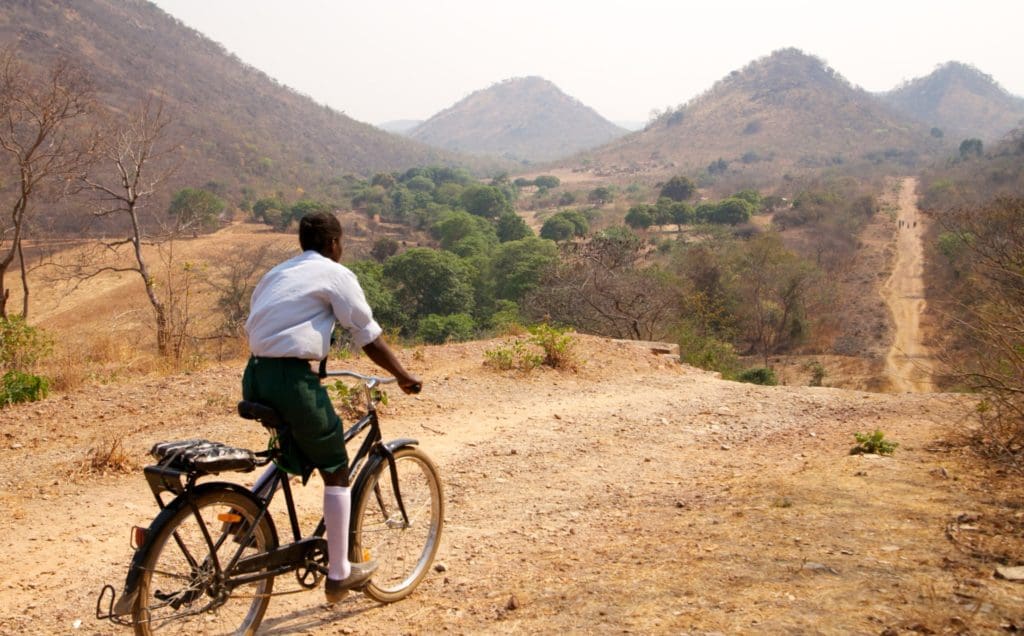
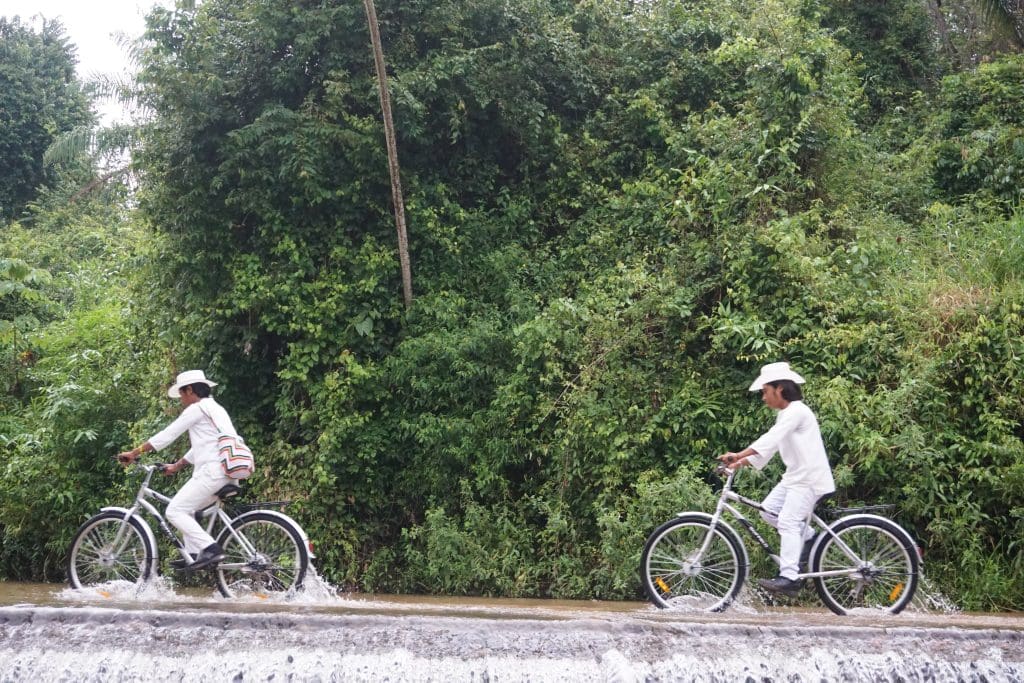
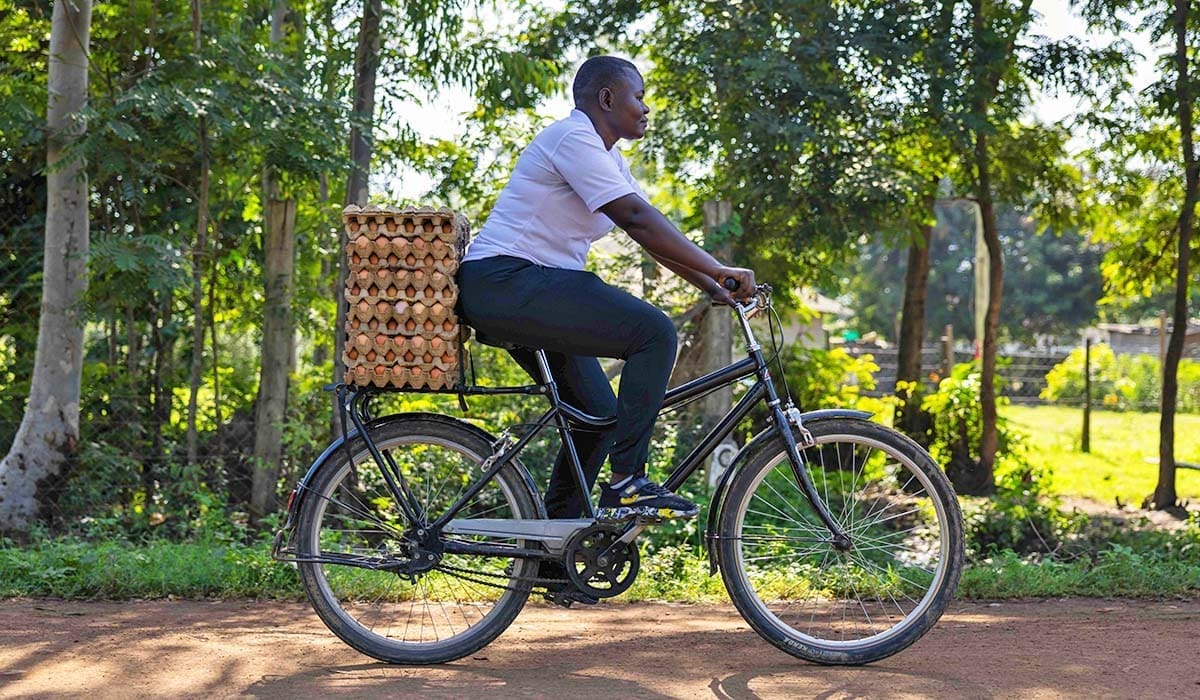
More distance in less time. More load with less effort.
That idea has guided our rider-centric philosophy for more than 20 years. But the Buffalo Bicycle didn’t arrive fully formed. It has evolved through years of rider feedback, field testing and lessons learned on the road.
Here’s how we evolved over 20 years, from using an existing bicycle in Sri Lanka to developing the newest Buffalo Bicycle models: the One and Pro.

Sivarasa (33) at dawn on a beach near Eravur, Sri Lanka. After a night out fishing at sea, he returns home to bike his three children to school.
Before the Buffalo Bicycle, there was the Lumala.
World Bicycle Relief began in response to the 2004 Indian Ocean tsunami. Working with local partners, we distributed more than 24,000 Lumala bicycles manufactured in Sri Lanka, helping people reconnect with schools, healthcare, livelihoods and one another.
As our work shifted from emergency response to long-term development, we began to ask a different question: What kind of bicycle could reliably travel long distances, carry heavy loads and withstand years of daily use?

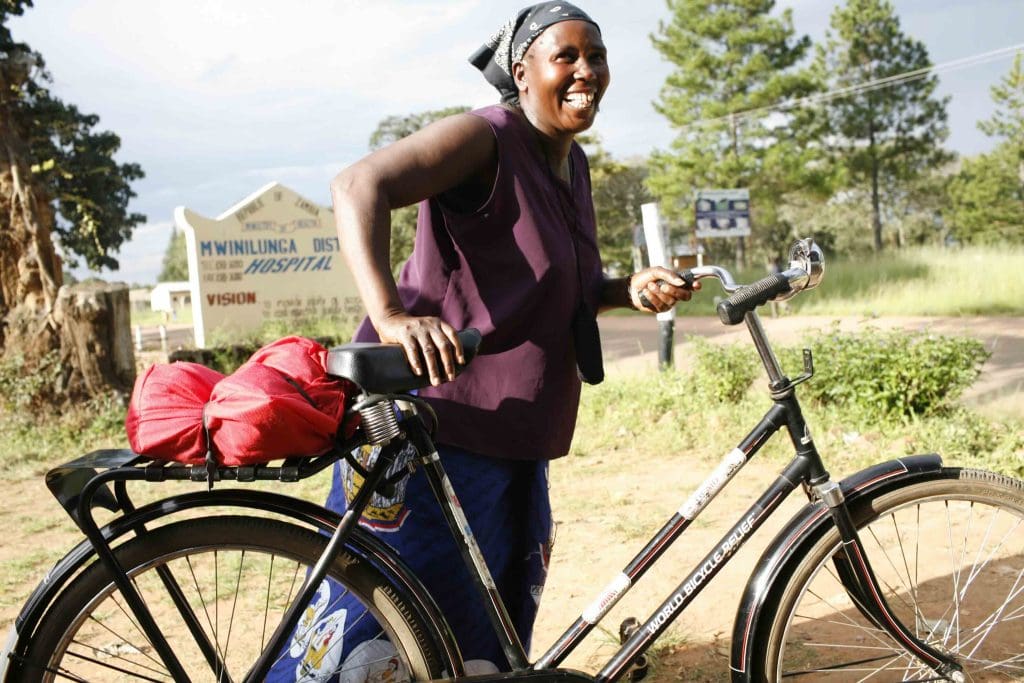
The Tata Buffalo Bicycle models, manufactured in India, carried World Bicycle Relief’s own design fingerprint.
Built on traditional roadster frames, they introduced two elements that would become central to the Buffalo Bicycle: a specially designed rear carrier and components selected specifically for durability.
At the time, we offered two frame styles—a “gent’s” bicycle with a double cross tube and a “lady’s” bicycle with a lowered top tube and smaller wheels.

As we learned more about who was riding the bicycles and how they were being used, it became clear that we needed a more inclusive design.

In 2010, World Bicycle Relief began our long-term manufacturing partnership with Giant Group and introduced the Buffalo Utility S1, a dependable workhorse designed for demanding daily use.
Its carbon-steel frame, rear coaster brake, heavy-duty carrier and locking center stand were built for one purpose: reliable, everyday performance. The new, gender-neutral design brought stronger, more consistent TIG-welded frames and the Buffalo Bicycle’s recognizable sloping top tube, making it easier for women, men and younger riders to mount and ride without sacrificing load-carrying strength.
Just as important, our partnership with Giant reinforced our continuous improvement process, driven by rigorous testing and rider feedback. We learned how people used the bicycle in real-world conditions and continually refined its design and components.
That approach remains central to the Buffalo Bicycle today: balancing rider satisfaction, bicycle durability and affordability to deliver the strongest possible value for the people who depend on it every day.

The Buffalo Charger marked an early experiment with a multi-gear Buffalo Bicycle.
Its six-speed derailleur helped riders navigate varied terrain, but came with trade-offs. The exposed system was more vulnerable to damage and required more maintenance, while the bicycle’s lighter carrier limited its usefulness for riders transporting heavy loads.
The Charger was used in select markets, but it helped reinforce an important challenge: How could we give riders the benefits of multiple gears without adding unnecessary complexity?

The Utility S2 offered a new answer to the gearing question.
Instead of a conventional derailleur, the S2 introduced World Bicycle Relief’s patented two-speed, two-chain drivetrain. With a simple back-pedal shift, riders could choose a lower gear for climbing and carrying heavy loads or a higher gear for flatter terrain.
It offered more range without the sensitive external components of a traditional multi-gear system.
Developed through years of testing and rider feedback, the S2 became World Bicycle Relief’s first patented product and earned international recognition for its design.

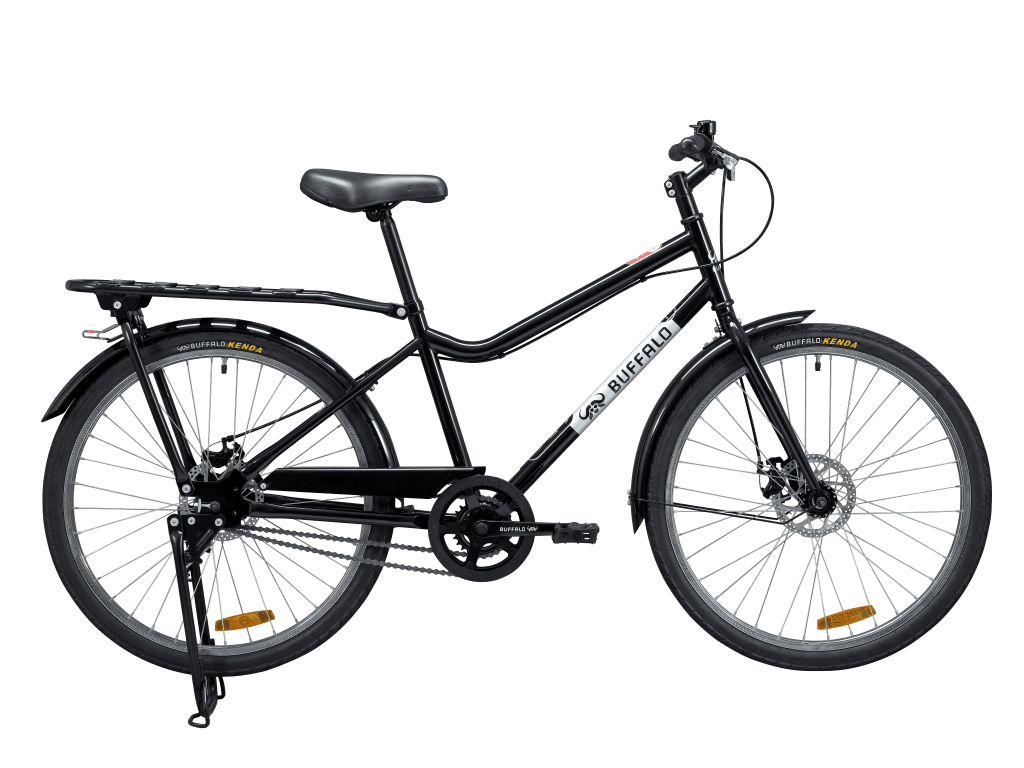
Now, more than 20 years of learning come together in the Buffalo One and Buffalo Pro. Both bicycles share a common foundation: a TIG-welded carbon-steel frame, heavy-duty steel fork and, for the first time, standard and large frame options.
They also feature:
The Buffalo One offers the simplicity of a single-speed drivetrain, a rear coaster brake and a 140 mm front disc brake.
The Buffalo Pro adds our patented two-speed drivetrain and front and rear disc brakes with larger 160 mm rotors, giving riders greater range and control across varied terrain.
Two different models, built from the same proven Buffalo DNA.

Look across the different versions of the Buffalo Bicycle and one pattern stands out: Riders show us what they need, we test solutions and we keep improving.
Sometimes that leads to a visible change, like a new frame or drivetrain. Other times, it means improving a component most people would never notice.
Chris Raymo, World Bicycle Relief’s Technical Engineering Director, points to the saddle as one example. After seeing how the sun, heavy loads and grease broke down common saddle materials, our team developed one that lasts longer and is also more comfortable for riders.

That same thinking extends to backward compatibility. Wherever possible, we design new components so riders can replace or upgrade one part rather than needing an entirely new bicycle.
The Buffalo Bicycle has changed significantly since our beginnings more than 20 years ago. But the reason behind every change remains the same: to help riders travel farther, carry more and rely on their bicycles for years to come.
Not new bicycles. Better bicycles.