Transforming Education and Community Resilience with UNICEF in Colombia

In the remote and arid region of La Guajira, northern Colombia, where climate change exacerbates already harsh living conditions, access to education and safe drinking water has long been an uphill battle for the indigenous Wayuu people. World Bicycle Relief (WBR), in partnership with UNICEF, is taking bold steps to address these intertwined challenges by empowering students and their families through the Power of Bicycles.

At the heart of this collaboration is the integration of World Bicycle Relief’s purpose-built Buffalo Bicycles into UNICEF’s WASH (Water, Sanitation, and Hygiene) program. By combining reliable transportation with sustainable water solutions, this partnership helps students in La Guajira reach school more efficiently while enabling critical access to safe and clean water. 

This partnership goes far beyond the donation of bicycles—it is a shared commitment to improving education and strengthening community resilience by providing essential tools for mobility and access to treated water. Together, World Bicycle Relief and UNICEF are helping to uplift the most vulnerable populations in La Guajira, with a particular focus on empowering girls who face daily challenges traveling to school and accessing water for their menstrual health management.
A holistic solution

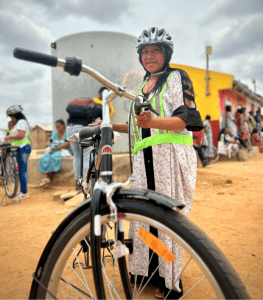
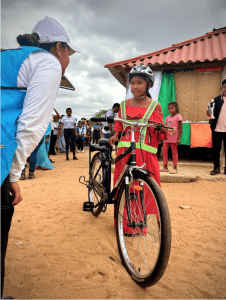
In rural La Guajira, where students often travel more than 3 kilometers on foot to reach school, access to education can seem like an unattainable dream. Long journeys under a blazing sun frequently result in school absences or early dropout, especially for girls, who are often expected to help their families collect water for daily needs. But with the rugged, purpose-built Buffalo Bicycles, these students can now make the journey to school in a fraction of the time.

Designed to meet the rugged terrain and challenging conditions of rural roads, Buffalo Bicycles are engineered for durability, with a heavy-duty frame and cargo racks that allow students to transport water jugs back to their homes. As UNICEF installs sustainable water systems at schools as part of the WASH initiative, children no longer face the dilemma of choosing between attending school or fetching water. They can now do both. This holistic approach transforms the bicycle into a dual-purpose tool—providing students with the opportunity to secure an education and ensuring that families have access to clean water for drinking, sanitation, and hygiene.

But the program doesn’t stop at the delivery of bicycles. WBR is working to establish a sustainable bicycle ecosystem in La Guajira by training local mechanics, opening retail shops, and ensuring spare parts are available for long-term bicycle maintenance. This holistic approach guarantees that the benefits of the bicycles—and the WASH initiative—are felt for years to come, creating lasting impact and resilience for the communities involved.

The impact of this program extends beyond the classroom. The partnership strengthens the entire community’s resilience by addressing two critical needs—education and water access. Families in La Guajira, many of whom are significantly affected by climate change and drought, are now better equipped to handle the challenges of their environment.

Transforming Lives with Bicycles

Since 2019, WBR’s efforts in Colombia have dramatically improved educational outcomes for over 26,539 students, and the results speak for themselves. According to data collected from World Bicycle Relief’s monitoring and evaluation of Colombia’s Mobilized Communities*:

  • A 36% reduction in school absences, ensuring more consistent learning.
  • A 36% increase in students feeling safe traveling to and from school, thanks to the sturdy, reliable Buffalo Bicycles.
  • A 58% reduction in days late to school, helping students maximize their educational opportunities.
  • 70% of the bicycles have been provided to female students, giving them greater access to education and reducing the risks of early dropout, child marriage, and teen pregnancy
  • 63% of school children provided with a bicycle frequently use it to access and transport water.

These results are more than just statistics—they reflect real change in the lives of thousands of students, giving them the opportunity to complete their education, access better jobs, and lift themselves and their families out of extreme poverty. With each bicycle, a family gains not only improved access to education but also access to the essential resources they need to survive and thrive.

*World Bicycle Relief  Mobilized Communities data La Guajira (2022-2023)

Impact and Sustainability

As WBR and UNICEF look toward the future, the partnership is set to expand its reach and deepen its impact. The 2024-2026 collaboration will focus on:

  • Empowering more students, particularly girls, by providing them with bicycles and ensuring they have the support needed to succeed academically.
  • Strengthening community management of water resources, improving long-term access to clean water, and building local capacity to maintain these systems.
  • Collecting and reporting data to demonstrate the transformative power of bicycles on education, health, sanitation, hygiene, and community resilience.
  • Ensuring sustainability by training community mechanics to maintain the bicycles, creating a self-sustaining mobility ecosystem.
  • With the first delivery of 500 bicycles in 2024, regular assessments will start from November and over time ensure the program continues to meet the community’s evolving needs. As the partnership progresses, both organizations remain committed to refining and expanding their efforts, aiming to foster lasting change in La Guajira.

Resilience, Opportunity and Bicycles

The partnership between World Bicycle Relief and UNICEF is more than an initiative to distribute bicycles—it is a blueprint for sustainable development. By combining mobility, education, and safe water access, the program addresses the root causes of poverty and creates a pathway toward resilience and opportunity. Students in La Guajira now have the tools they need to succeed academically and help their  and their families meet basic needs.

By leveraging bicycles for education and water access, World Bicycle Relief and UNICEF are setting the groundwork for a brighter, more resilient future in La Guajira. As students gain access to the tools they need to stay in school and bring clean water home, they become symbols of hope and progress in their communities.

As we look to the future, this collaboration serves as a model for how bicycles can be used as a catalyst for community development, equipping individuals and families with the resources they need to break free from the cycle of poverty. For thousands of students, the bicycle is more than a means of transport—it is a lifeline to a better future filled with hope, opportunity, and progress.


World Bicycle Relief has partnered to bring mobility to Colombia since 2014. Interested in learning more about our impact there?
Colombia

More Stories Like This One